Simpler diagnosis.
Timelier care.
Our solution for neonatal total bilirubin measurement. For a safer start in life.
FOR WHAT
MATTERS
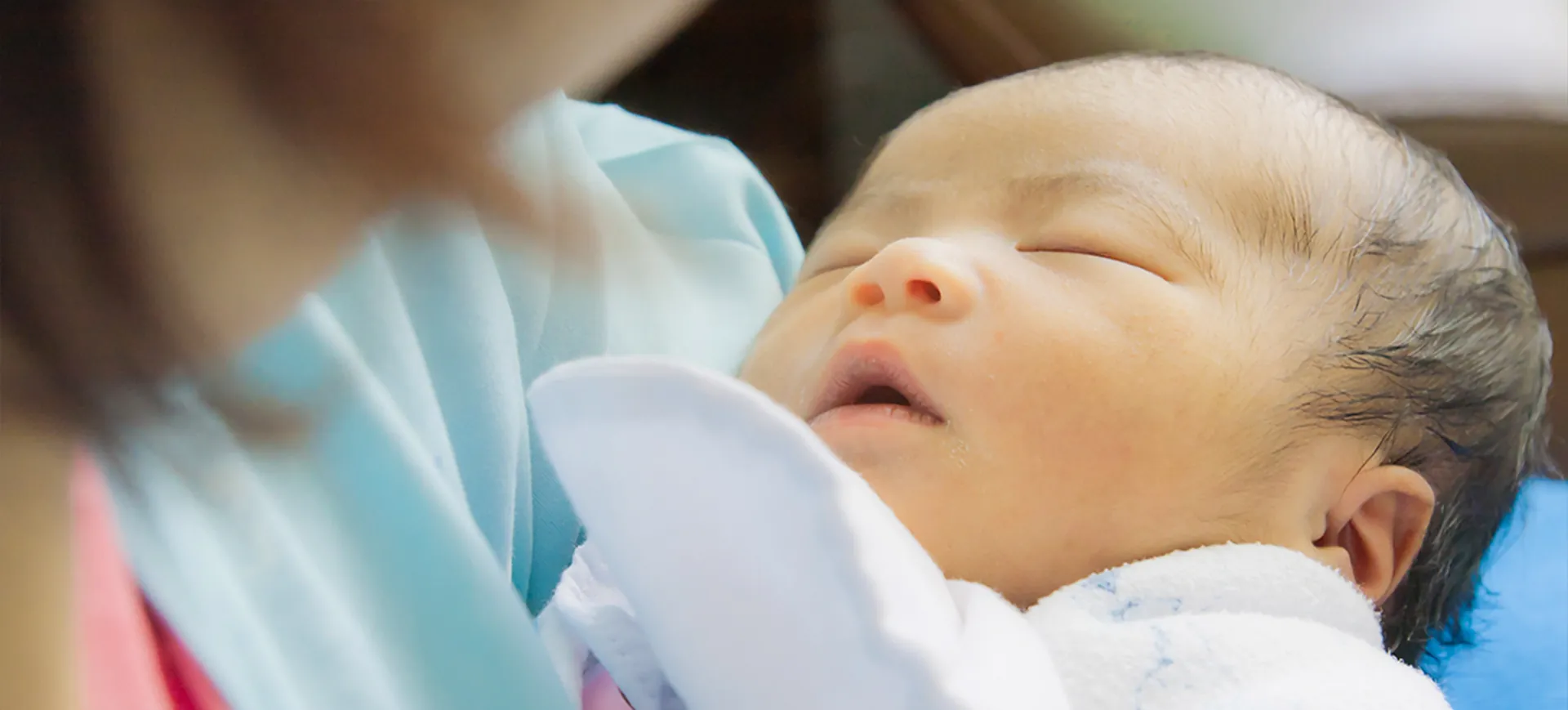
Recognising jaundice early can change a life.
In the first days of life, a build-up of bilirubin can cause the yellow colouring of the skin and eyes known as jaundice. It is common, but excessively high levels can lead to serious, permanent neurological damage.
The crucial task is to identify newborns who need attention. Measuring bilirubin helps healthcare professionals assess the situation and determine the appropriate care pathway.
Monitoring therefore needs to support the baby’s first days and continue after discharge when needed. Timely diagnosis is the first step towards preventing complications and giving each newborn the care they need.
Understanding neonatal jaundice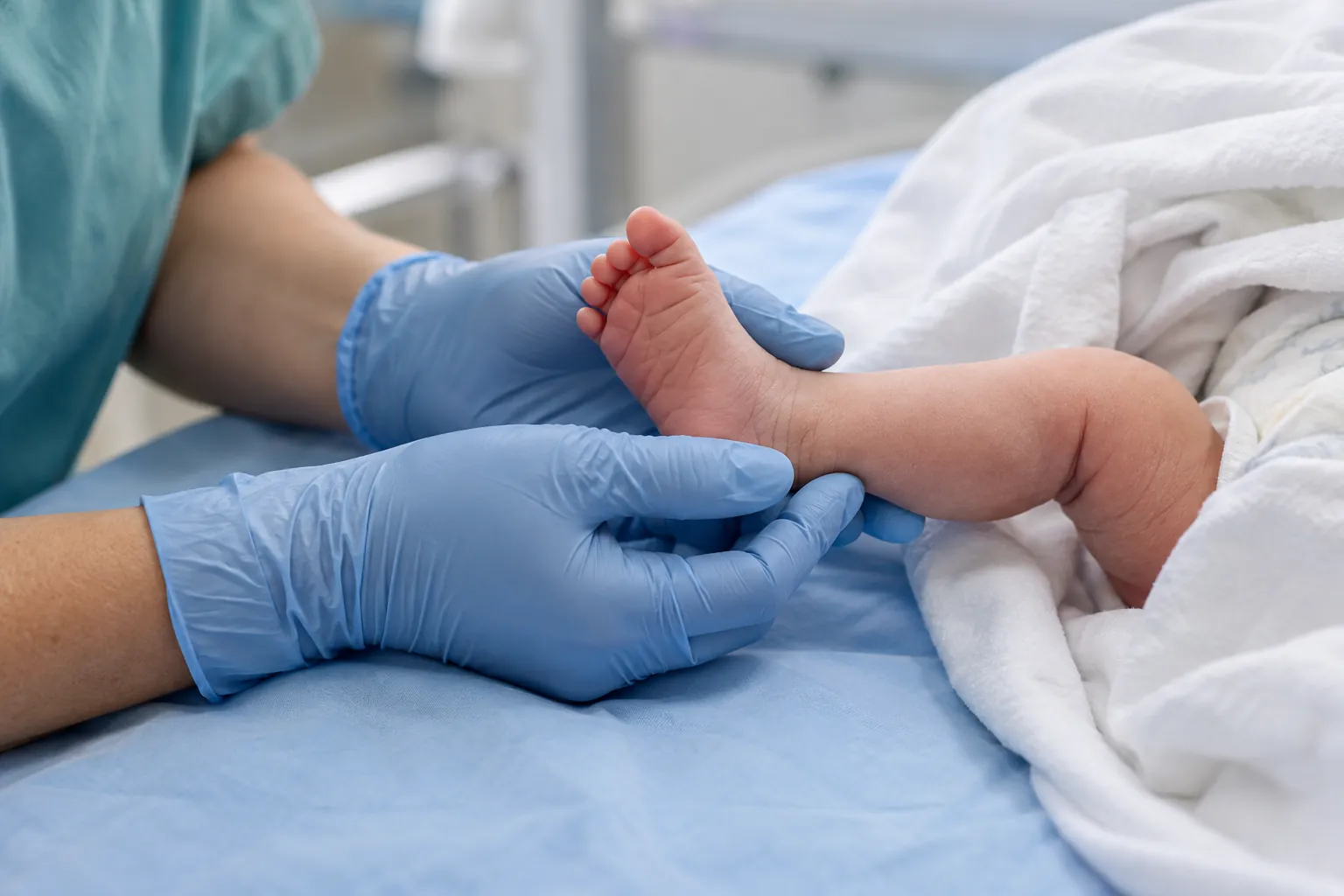
Every care journey begins with attention.
A small drop. Essential information.
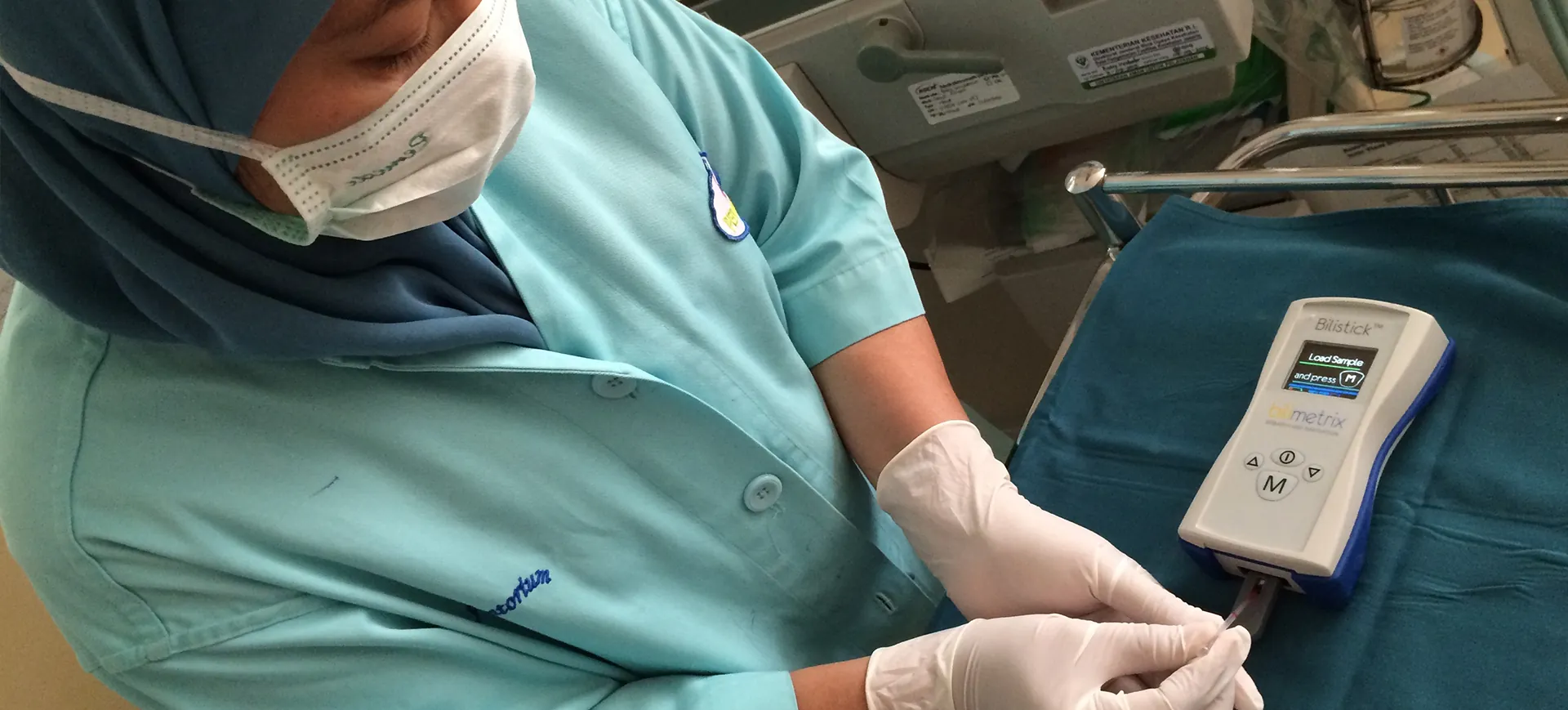
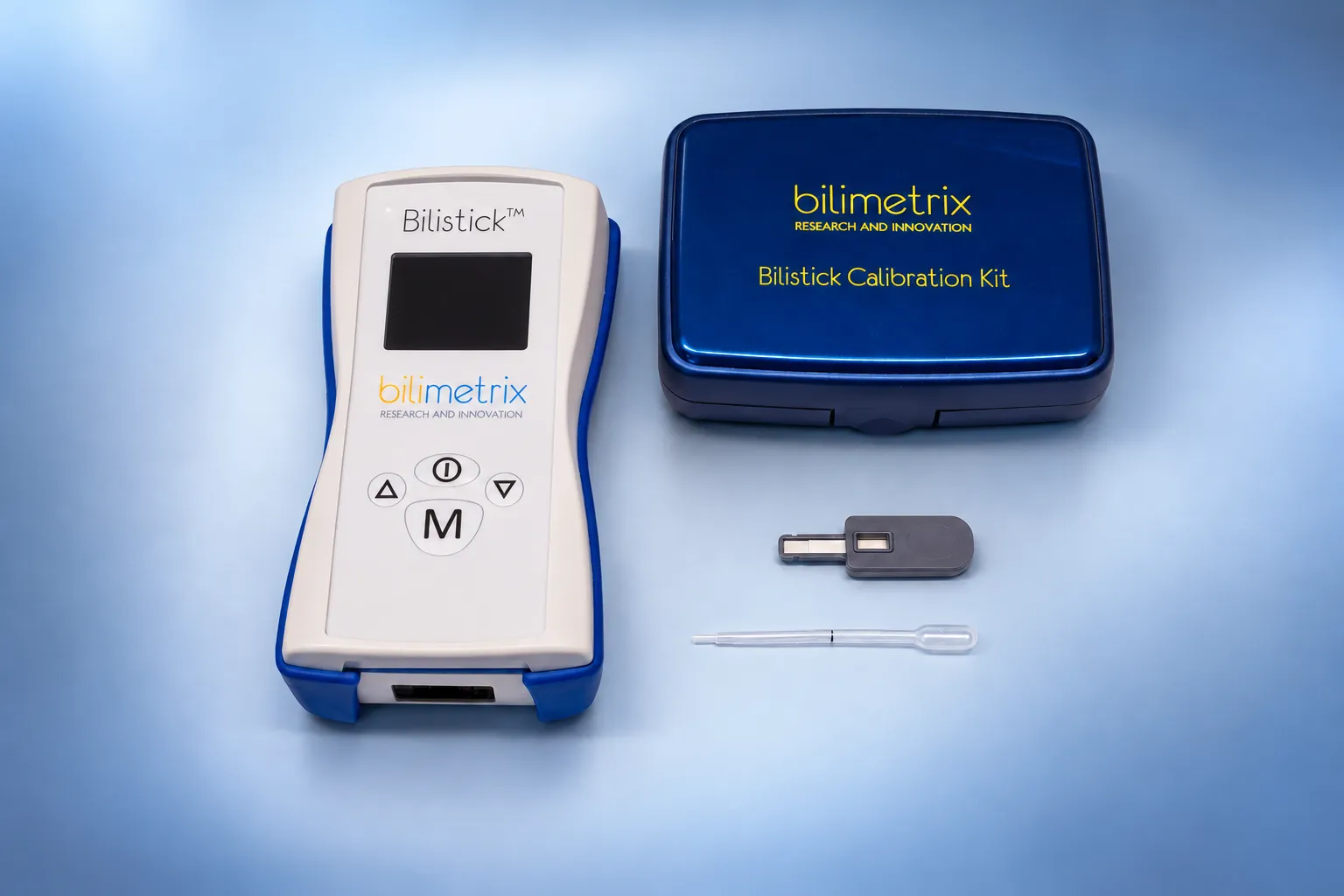
The Bilistick® System 2.0 brings bilirubin measurement closer to the newborn, using a portable reader and a test strip. The procedure is minimally invasive and requires a small capillary whole blood sample.
Compact and battery-powered, the reader allows trained healthcare professionals to perform the test beyond a fully equipped laboratory.
- The sample
A small amount of capillary whole blood.
- The strip
The sample is applied to the test strip.
- The reader
The device analyses the sample and displays the result.
Measurement, closer to the baby.
Supporting newborns, families and the people who care for them.
The newborn is at the centre of the project, alongside their family and healthcare team. Continuity between the birth centre and community care is especially important when jaundice requires monitoring after discharge.
For doctors, nurses and midwives, access to a measurement close to the baby can support monitoring. For families, a coordinated pathway helps maintain contact with healthcare services during the return home.
Community projects demonstrate the value of collaboration between hospitals, family health services and professionals. The device forms part of this care network, supporting clinical assessment through the people and services responsible for the newborn.
Explore the applications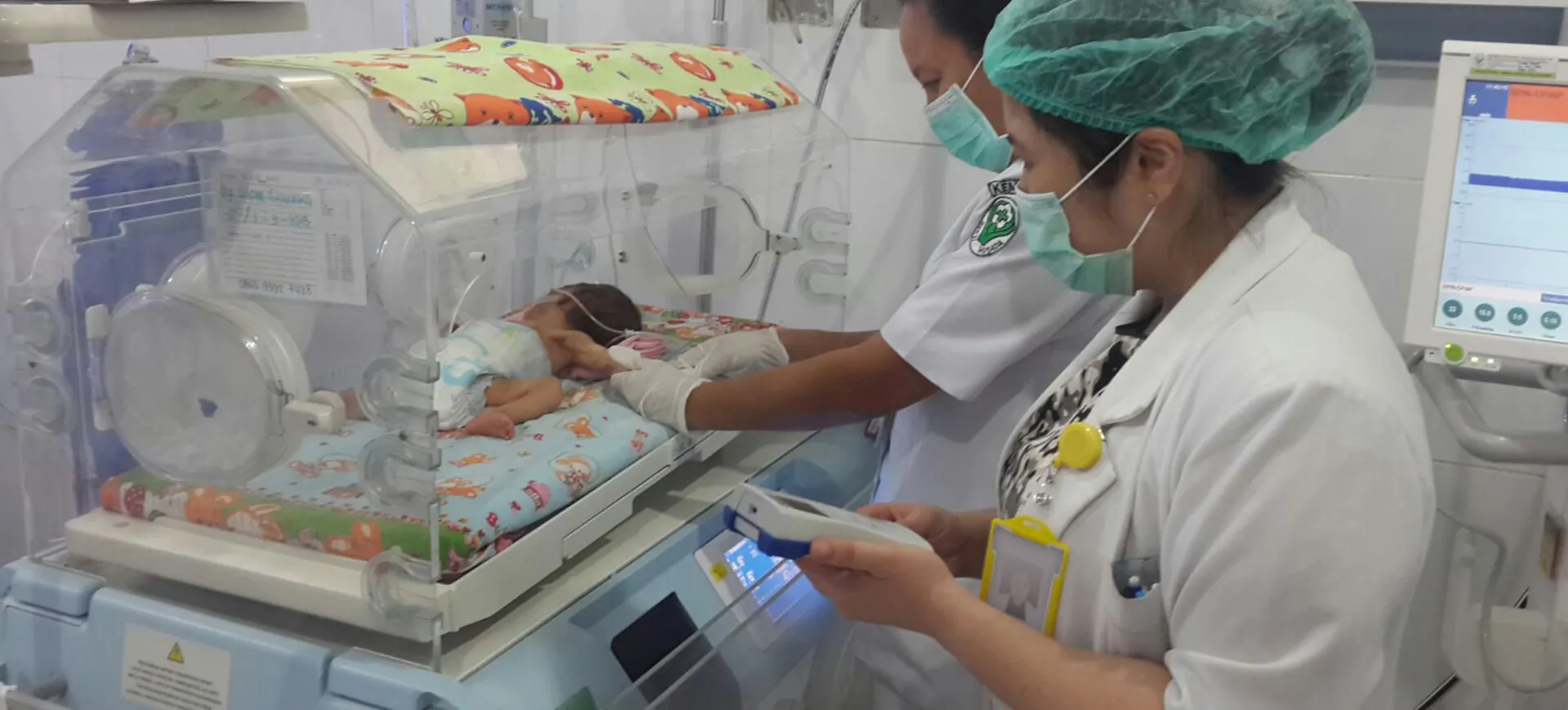
Technology meets the people who care.
Making diagnosis accessible wherever it is needed.
Bilimetrix grew out of bilirubin research and a commitment to help prevent kernicterus. Our aim is to turn scientific knowledge into practical tools for newborn care.
Where access to diagnostic services is difficult, portability and simplicity have a tangible role. Bringing a measurement closer to the baby means addressing barriers that can delay recognition of jaundice.
Our work includes device development, training and collaboration with clinical and scientific partners. For a technology to be useful, it must connect with the people, skills and facilities that make it part of everyday care. That connection guides our approach to research and innovation.
Meet Bilimetrix
Bringing diagnosis closer to people.
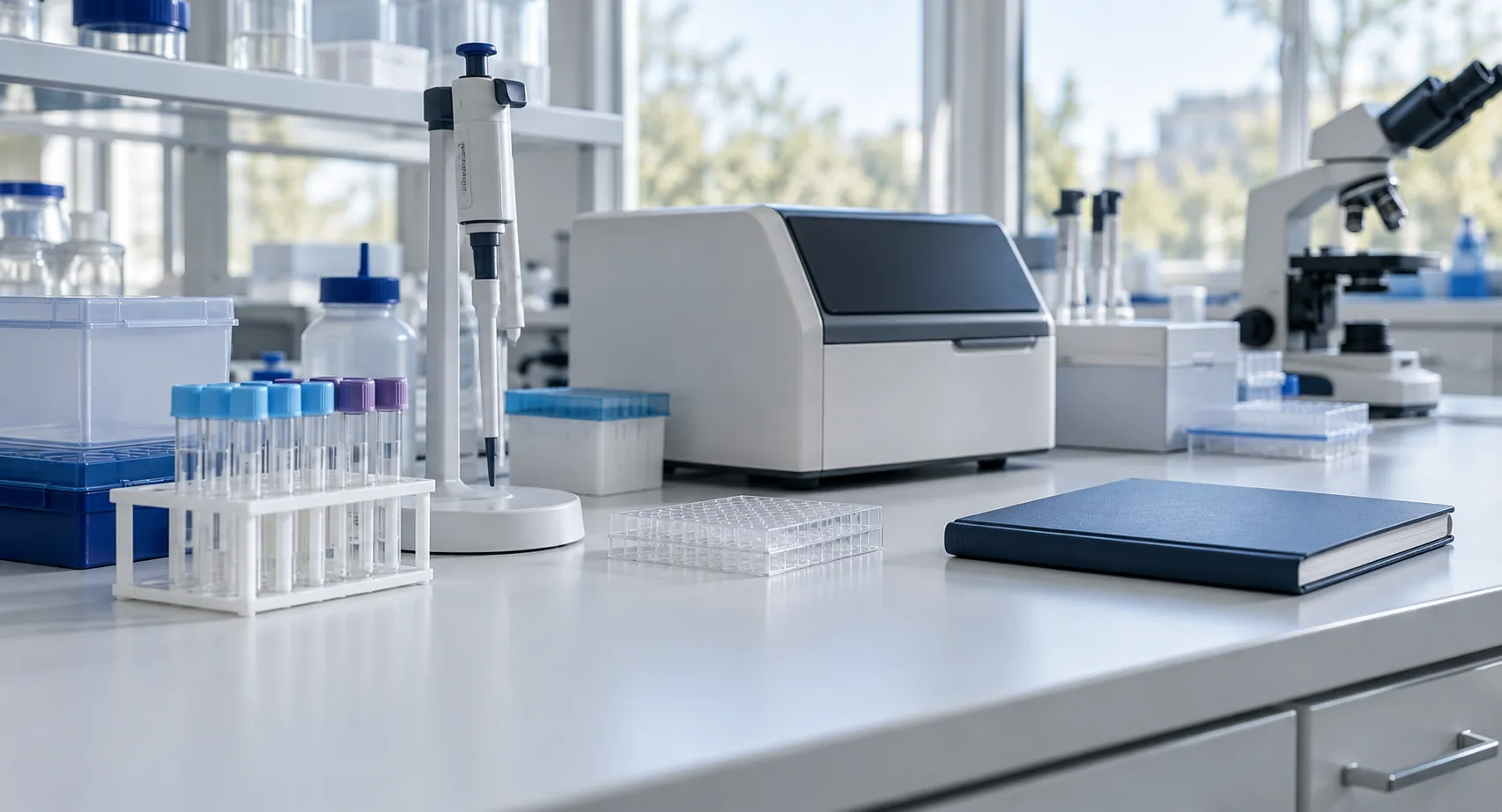
Technology, research and expertise.
Explore the Bilistick® System 2.0, consult scientific publications and learn about our experience in neonatal diagnostics.

Certifications and standards
A quality-focused management system supporting Bilimetrix operations and devices.
Certification and accreditation

- UNI CEI EN ISO 13485:2016
Quality management system